
Cellular Repair vs True Regeneration: The Vital Difference
In short: Repair is the body’s emergency response — it seals damage with collagen scar tissue that never regains original function. Regeneration rebuilds the original tissue architecture with no scar. Adults default to repair because cellular senescence and chronic inflammation block the regenerative pathway. Autophagy, periodic fasting (via mTORC1 suppression) and Ayurvedic Rasayana botanicals such as Ashwagandha and Triphala help shift the body back towards true regeneration.
In the pursuit of true cellular longevity, we often use words like “healing,” “repair,” and “regeneration” interchangeably. Yet, within our biology, these represent drastically different outcomes. One is a rapid patch designed for immediate survival; the other is a profound biological reset that restores youthful function.
Understanding this distinction is the ultimate foundation for optimising health, vitality, and longevity.
The Biology of Patching: Understanding Tissue Repair
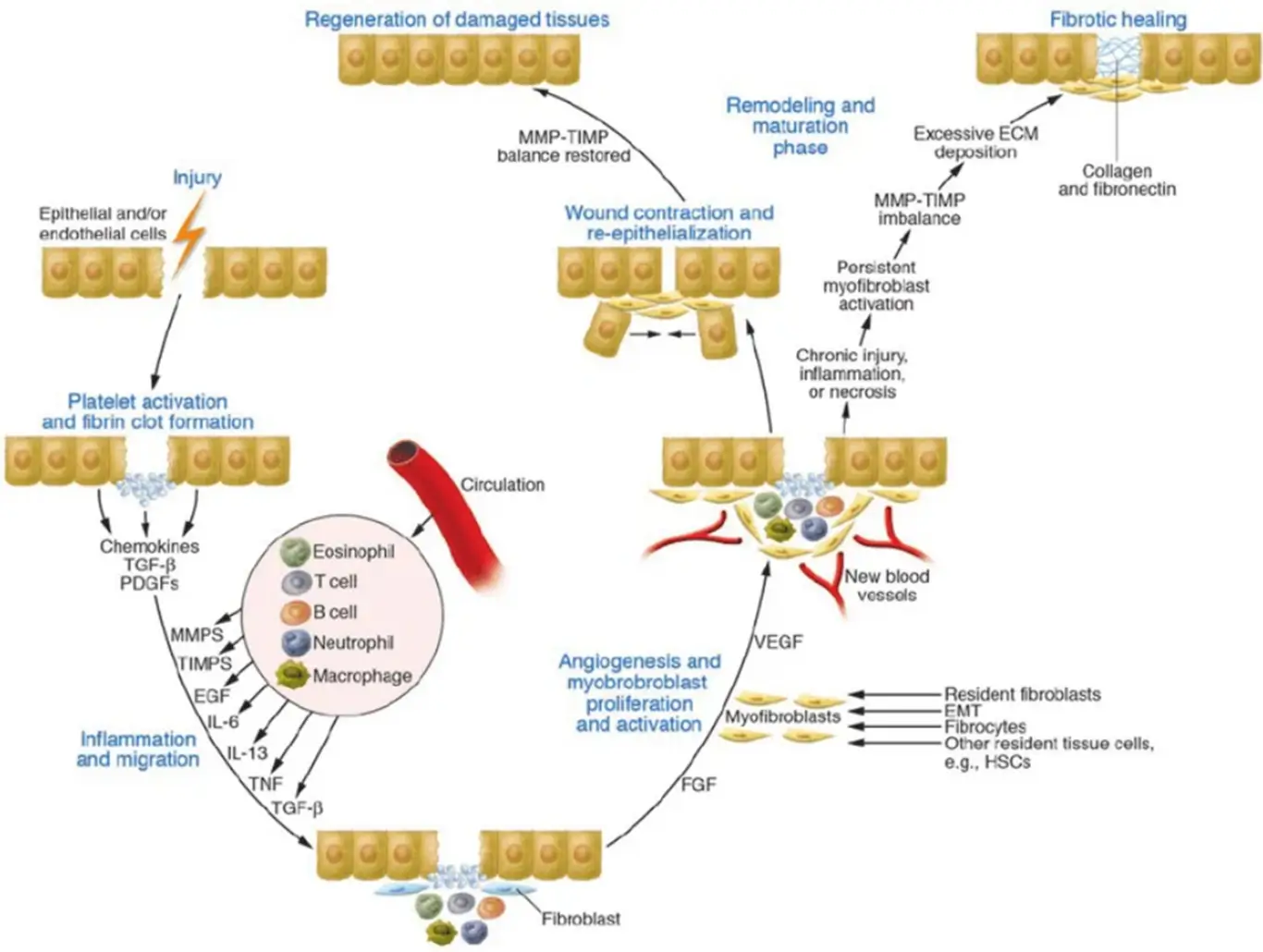
Damage is an inevitable aspect of living. When tissue is injured or stressed by inflammation, the body’s immediate priority is stabilisation. It triggers a meticulously scripted wound healing drama, relying on fibroblasts and the extracellular matrix to quickly close the wound.
However, this rapid response known as repair is fundamentally imperfect. Rather than recreating the original tissue, the body lays down a meshwork of collagen, replacing functional tissue with stiff, non-functional scar tissue. While this fibrotic healing saves us in the short term, it leaves the tissue permanently altered, never regaining its original capacity.
The Pinnacle of Healing: True Regeneration
In contrast, regeneration is the ability to recreate the original tissue architecture and function flawlessly, without leaving a scar. If repair is like patching a punctured tire, regeneration is growing a brand-new one.
Mammals possess a remarkable capacity for complete regeneration during early development, but as we age, our bodies default to fibrotic repair. To achieve true regeneration in adulthood, our body must seamlessly coordinate epithelial and stromal interactions to reinstall cellular homeostasis, allowing stem cells to rebuild the missing architecture.
Cellular Senescence: The Barrier to Renewal
What prevents our bodies from choosing regeneration over repair as we get older? A major culprit is cellular senescence.
When cells accumulate unrepairable damage over time, they enter a state where they stop dividing but refuse to die. These senescent cells secrete a highly pro-inflammatory and pro-fibrotic cocktail of molecules. This constant inflammatory noise forces the surrounding tissue into a chronic state of emergency repair, blocking the delicate sequence of cellular clearance and true regeneration.
Autophagy: The Cellular Reset Button
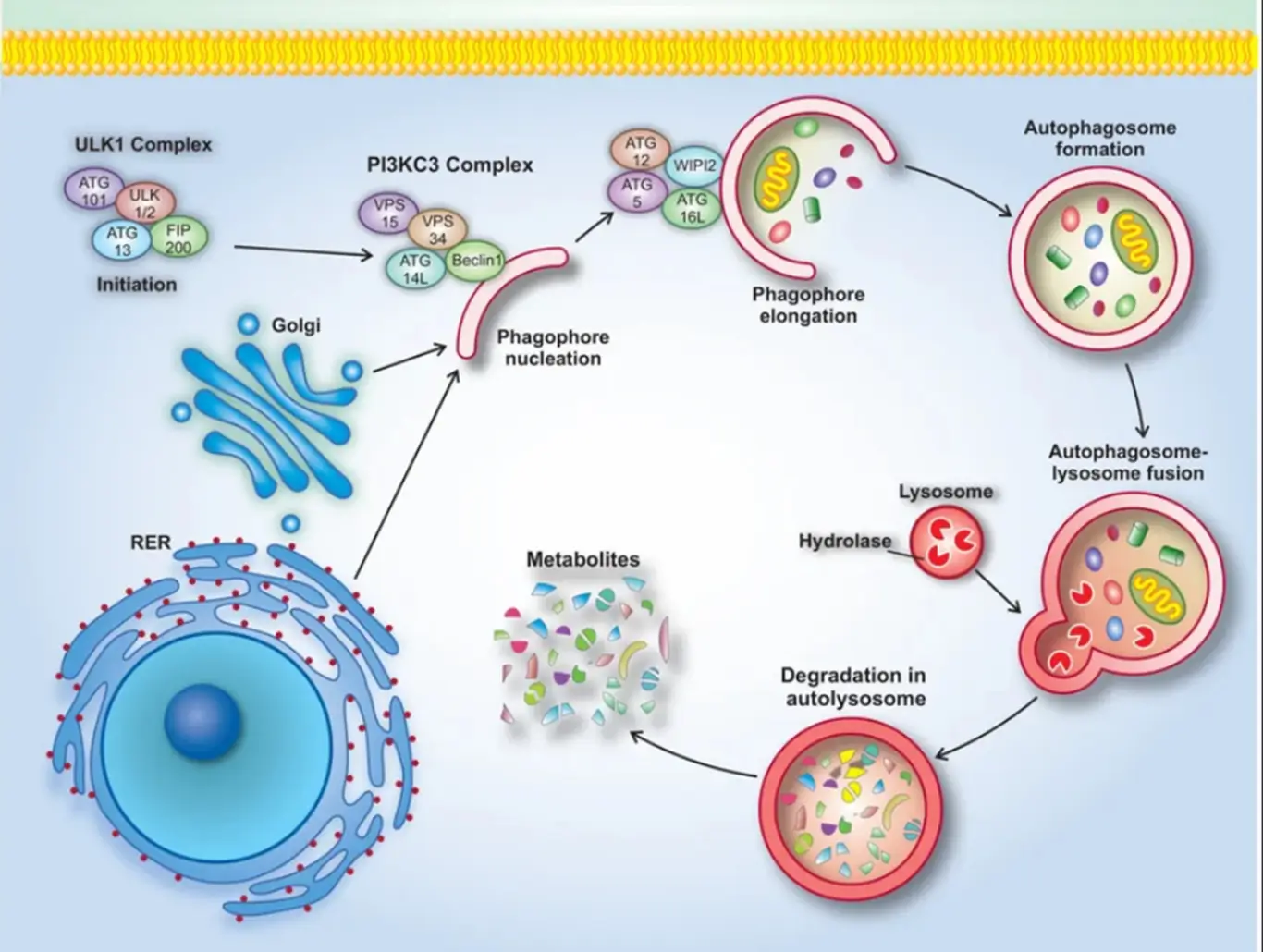
To shift the body from fibrotic repair to true regeneration, we must clean up the cellular environment. This is driven by autophagy, an evolutionarily conserved self-renewal mechanism that degrades and recycles damaged intracellular components.
By forming a double-membrane structure called an autophagosome, the cell sequesters defective organelles (like failing mitochondria) and toxic proteins, delivering them to lysosomes for breakdown. This internal quality control process is essential for maintaining tissue homeostasis, reducing oxidative stress, and ensuring that stem cells have a clean slate to differentiate and rebuild new tissue.
Dietary Triggers: Fasting for Stem Cell Activation
Modern longevity science has shown that we can actively turn on these regenerative pathways through specific metabolic inputs. Intermittent and periodic fasting protocols are powerful triggers for clearing out damaged cells and promoting deep tissue protection.
During periods of calorie restriction, the body suppresses a nutrient-sensing pathway known as mTORC1. This biological signal preserves the function and survival of reserve stem cells particularly in the intestinal epithelium, dramatically enhancing their regenerative capacity when refeeding occurs. Additionally, caloric restriction promotes a metabolic shift toward oxidative phosphorylation, which improves mitochondrial function and significantly boosts the regenerative potency of muscle stem cells.
Ayurvedic Wisdom Meets Cellular Biology
These cutting-edge cellular discoveries beautifully validate ancient systems of holistic health. In Ayurveda, the practice of Rasayana (rejuvenation therapy) focuses on systemic vitality and the management of oxidative stress. Oxidative stress, driven by reactive oxygen species (ROS), damages DNA and proteins, trapping the body in a cycle of constant inflammatory repair.
Ayurvedic botanicals act as sophisticated modulators of this process:
- Ashwagandha (Withania somnifera): This potent adaptogen actively mitigates age-related mitochondrial decay by upregulating the Nrf2 antioxidant defence pathway, shielding the cell from oxidative damage and preserving energy production.
- Triphala: A revered polyherbal formulation, Triphala has been shown to restore the activity of critical antioxidant enzymes like superoxide dismutase (SOD1), protecting delicate neural tissues from oxidative injury and apoptosis.
By lowering systemic stress and inflammation through these traditional remedies, we signal to the body that it is safe to turn off the emergency fibrotic response and invest energy into long-term regeneration.
Cultivating a Regenerative Lifestyle
Healing is not just about surviving wear and tear. By aligning our daily habits, dietary rhythms, and holistic botanical practices, we can curate an internal environment that supports our stem cells. We can move beyond the quick fix of tissue repair and unlock the profound, life-extending power of true cellular regeneration.
This is the principle behind our Cellular Vitality & Longevity programme at Swastik Wellbeing Sanctuary.
Frequently Asked Questions
What is the difference between cellular repair and regeneration?
Repair replaces damaged tissue with non-functional collagen scar, restoring structure but not function. Regeneration rebuilds the original tissue architecture and function without scarring.
Why does the body scar instead of regenerating?
Senescent cells accumulate with age and secrete pro-inflammatory, pro-fibrotic molecules. This keeps tissue in a chronic emergency-repair state and blocks the sequence needed for regeneration.
How does fasting help cellular regeneration?
Calorie restriction suppresses the nutrient-sensing pathway mTORC1, which preserves reserve stem cell function and survival, enhancing regenerative capacity when refeeding occurs.
What is autophagy and why does it matter for renewal?
Autophagy is a self-renewal mechanism that degrades and recycles damaged intracellular components, including defective mitochondria and toxic proteins, giving stem cells a clean slate to rebuild tissue.
Which Ayurvedic herbs support cellular regeneration?
Ashwagandha upregulates the Nrf2 antioxidant defence pathway to limit age-related mitochondrial decay, and Triphala restores antioxidant enzymes such as SOD1 to protect tissue from oxidative injury.
Can adults regenerate tissue at all?
Complete regeneration is strongest during early development, but lowering systemic inflammation and supporting autophagy can shift adult tissue away from purely fibrotic healing towards genuine renewal.
Scientific References
- “Tissue repair: The hidden drama.” PMC. pmc.ncbi.nlm.nih.gov/articles/PMC3055648
- “Autophagy in Tissue Repair and Regeneration.” MDPI. mdpi.com/2073-4409/14/4/282
- “Autophagy in the Regulation of Tissue Differentiation and Homeostasis.” PMC. pmc.ncbi.nlm.nih.gov/articles/PMC7758408
- “The balancing act of the liver: tissue regeneration versus fibrosis.” PMC. pmc.ncbi.nlm.nih.gov/articles/PMC5749503
- “Intermittent and periodic fasting, longevity and disease.” PMC. pmc.ncbi.nlm.nih.gov/articles/PMC8932957
- “Protective Effect of Triphala against Oxidative Stress-Induced Damage.” PMC. pmc.ncbi.nlm.nih.gov/articles/PMC8052154
- “Enhancing healthspan with Ashwagandha (Withania somnifera).” PMC. pmc.ncbi.nlm.nih.gov/articles/PMC12417257
- “Wound healing and fibrosis: current stem cell therapies.” PMC. pmc.ncbi.nlm.nih.gov/articles/PMC7089773
- “Cellular Senescence in Lung Fibrosis.” PMC. pmc.ncbi.nlm.nih.gov/articles/PMC8267738
- “Cellular senescence: from physiology to pathology.” PubMed.
- “Calorie Restriction Governs Intestinal Epithelial Regeneration through Cell-Autonomous Regulation of mTORC1 in Reserve Stem Cells.” PMC. pmc.ncbi.nlm.nih.gov/articles/PMC5919411
- “A Review of the Impact of Calorie Restriction on Stem Cell Potency.” PMC. pmc.ncbi.nlm.nih.gov/articles/PMC8407795
About Dr. Shanthi Ganga
Designation: Senior Ayurvedic Physician
Qualification: BAMS (Bachelor of Ayurvedic Medicine and Surgery)
Experience: 17+ Years
Specialisation: Panchakarma, Lifestyle Disease Management, Pain Management, Autoimmune Disorders, Integrative Lifestyle Medicine, Clinical Nutrition
Dr. Shanthi Ganga is a Senior Ayurvedic Physician with over 17 years of clinical experience in Ayurveda. She specialises in Panchakarma, chronic ailments, autoimmune disorders, pain management and lifestyle disease management. With advanced qualifications in Stree Ayurveda, Herbal Cosmetology, Clinical Nutrition, Sports Nutrition and Integrative Lifestyle Medicine, along with teaching experience at 1000 Yoga, Bengaluru, she combines classical Ayurvedic wisdom with modern preventive healthcare to deliver personalised, evidence-informed wellness solutions.
Related Blogs

Rasayana therapy is the branch of Ayurveda devoted to rejuvenation, using diet, herbs, daily conduct and rest to nourish the tissues, usually after purification.

A Diwali detox is a short, gentle reset of simple meals, hydration, sleep and movement that helps the body recover from festive excess, without juice cleanses or extreme fasting.

Preventive health aims to stop or catch disease early, longevity aims to extend healthspan, and regenerative wellness aims to restore the body's capacity to repair and recover.
Regenerative wellbeing is an approach to health that works to restore the body's own capacity to repair, renew and adapt, instead of only relieving symptoms or lowering future risk.
Sardinemaxxing is the practice of deliberately eating sardines far more often than usual, sometimes daily and sometimes exclusively, to capture their omega-3s.

Financial wellbeing is not simply about having more money. It is about having a sense of security, control, resilience and confidence around your financial life.
The vagus nerve is the main nerve of the parasympathetic nervous system, forming a two-way communication line between the brain and the heart, lungs and digestive tract.
Autophagy is the body's cellular recycling system. Cells identify damaged proteins and dysfunctional mitochondria, break them down, and reuse the components.

A 72-hour digital detox is a three-day period in which smartphone use is cut back to essentials, with recreational scrolling removed entirely